Research
Research experience
Wearable devices that record physiological signals and process them on the device, with a current focus on the gut.
Current research
Hardware Platform for Real-Time Gut Activity Monitoring
2026 – presentFinal-year project, University of Moratuwa · Team of 4 · Supervisor: Dr. Pranjeewan
Extending OpenGut: building the next version of the hardware, with on-device noise cancellation and classification of gut sounds for real-time monitoring.
Real-Time Heart-Rate Estimation Using PPG on Embedded Systems During High-Intensity Activity
2026 – presentBiomedical Signal Analysis module, University of Moratuwa
Extending the TROIKA heart-rate estimation method and comparing variants that can run on Nordic microcontrollers. Early stage.
Biomedical Signals and Graph/Topological Neural Networks
2026 – presentResearch Project module, University of Moratuwa
Early-stage work on graph and topological neural networks for biomedical signals, processing them over graphs and higher-order topological domains.
FaceVitals: Contactless, Bias-Robust Estimation of Heart Rate, SpO₂ and Blood Pressure from RGB Facial Videos
2026 – presentIEEE Signal Processing Cup (SP Cup), University of Moratuwa team · Supervisor: Dr. Pranjeevaan
Estimating heart rate, blood-oxygen saturation and blood pressure from ordinary RGB video of the face, with no contact sensors, and designed to stay accurate across different people and recording conditions.
Past positions
Research Intern
Dec 2025 – Jun 2026Augmented Human Lab, National University of Singapore · Supervisor: Prof. Suranga Nanayakkara
- Built the hardware for OpenGut, a wearable platform for recording gut sounds non-invasively and playing them back as audio or haptic feedback: an nRF52840-based PCB with two synchronised digital microphones, microSD logging and plug-in audio and haptic actuators; firmware in the nRF Connect SDK; and a 3D-printed mic-to-body interface, enclosure and belt.
- Recordings correlated well with a medical-grade stethoscope for over 75% of gut-activity segments; the device records for 24 hours on a 1000 mAh battery.
- Built the ESP32-driven vibration, heat/cold and audio hardware for Interrupting Autopilot, an 11-participant study.
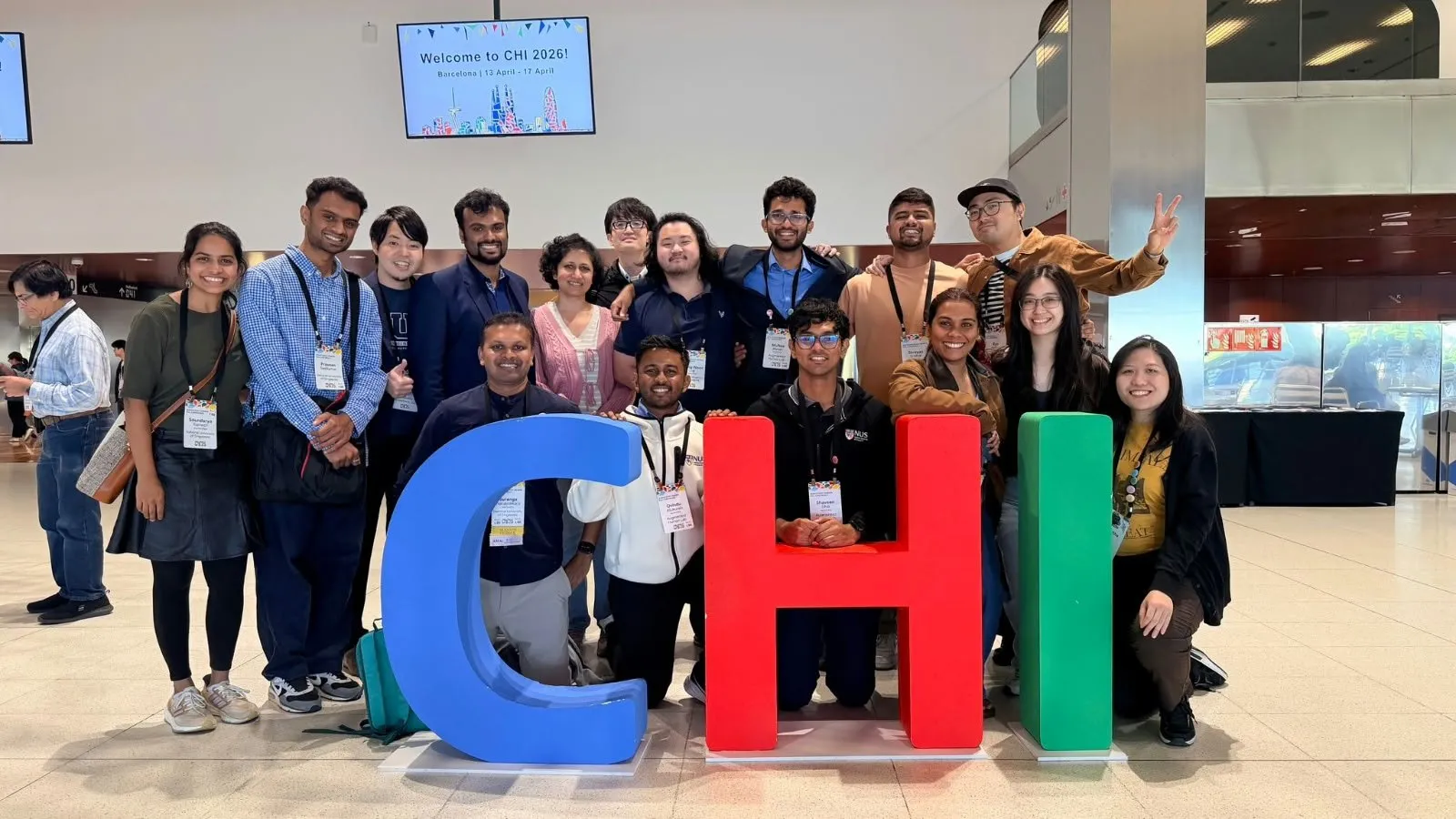
The lab at CHI '26 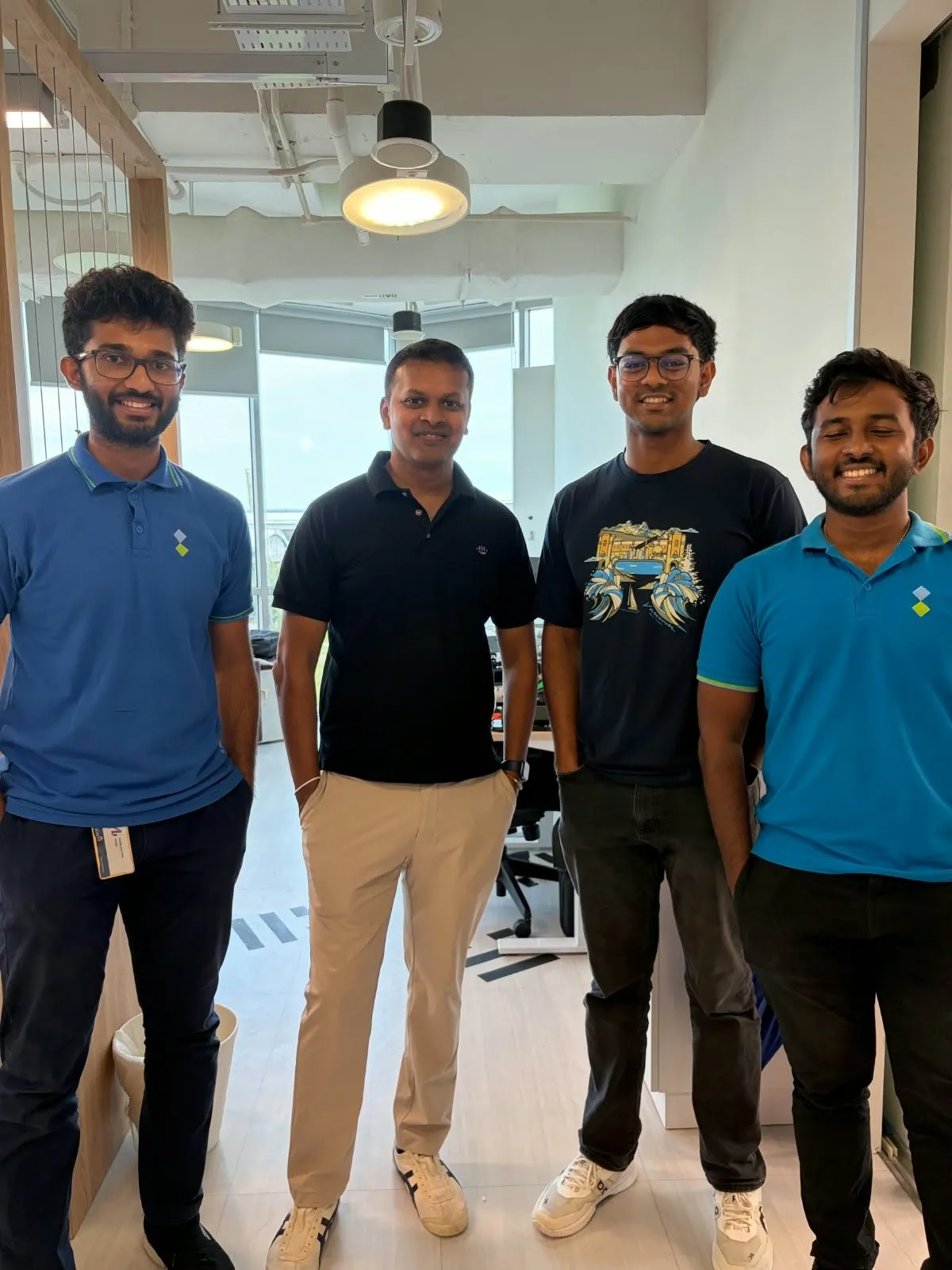
Augmented Human Lab 
National University of Singapore 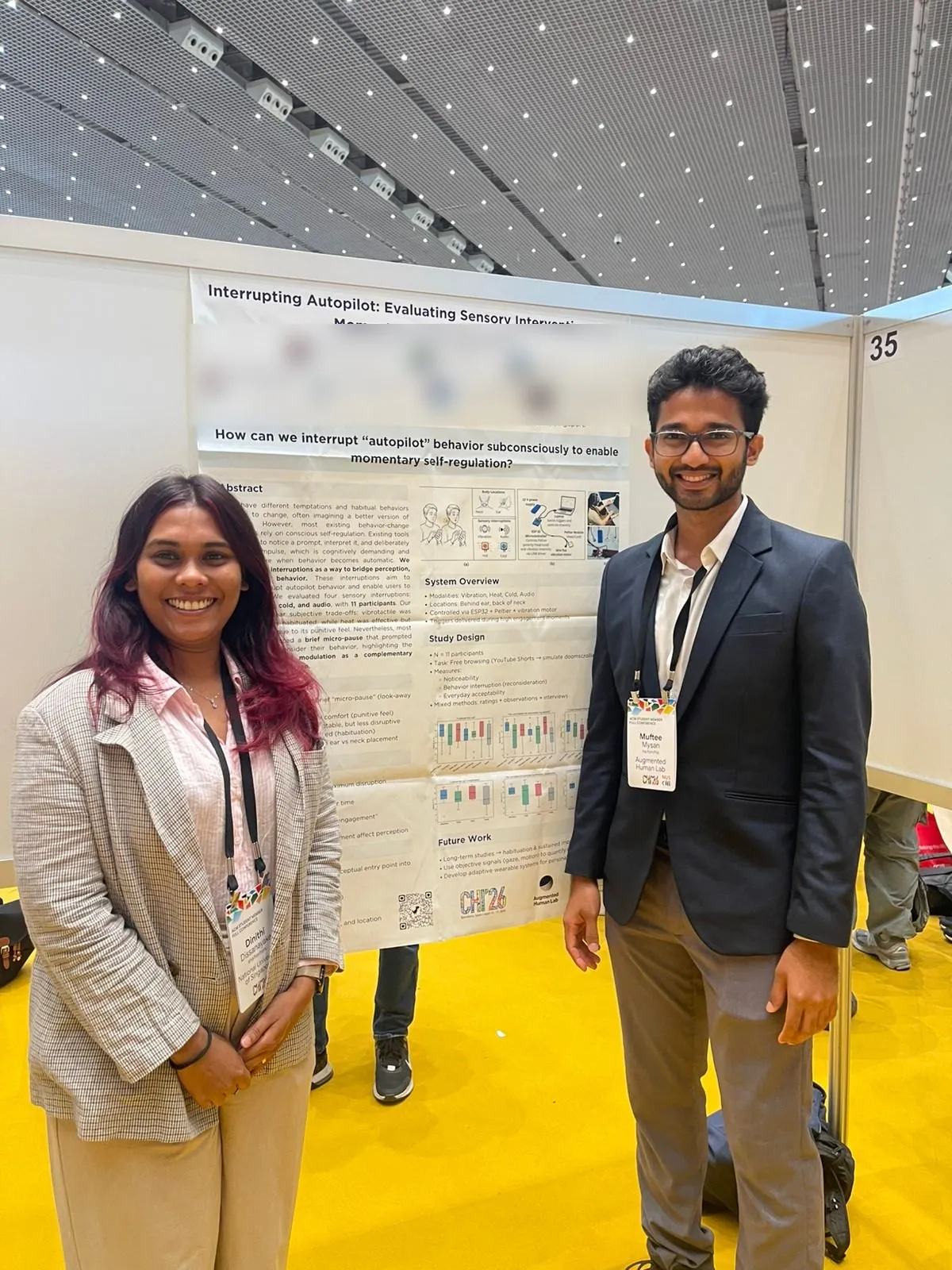
Presenting the Interrupting Autopilot poster at CHI '26. 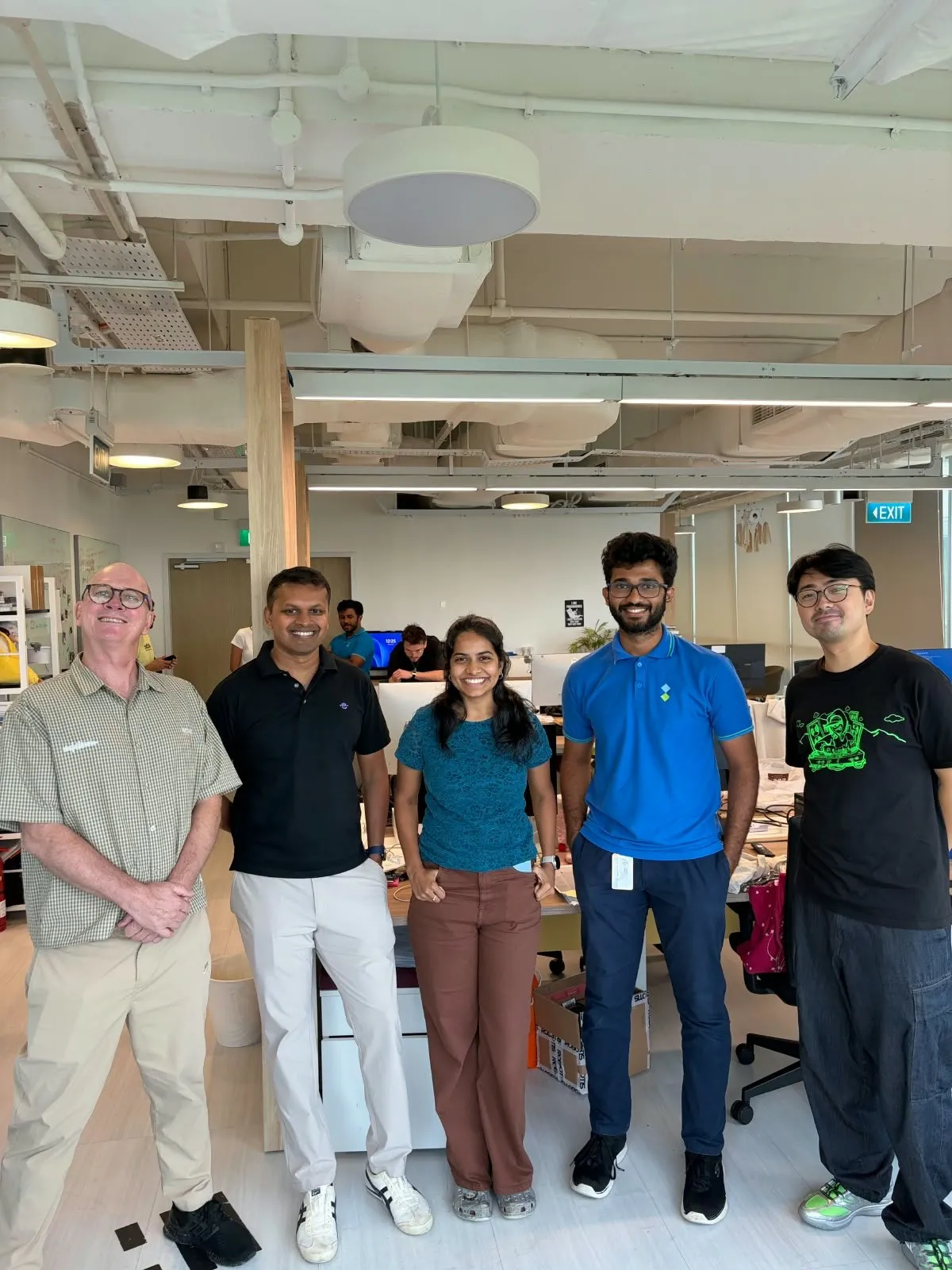
The OpenGut team 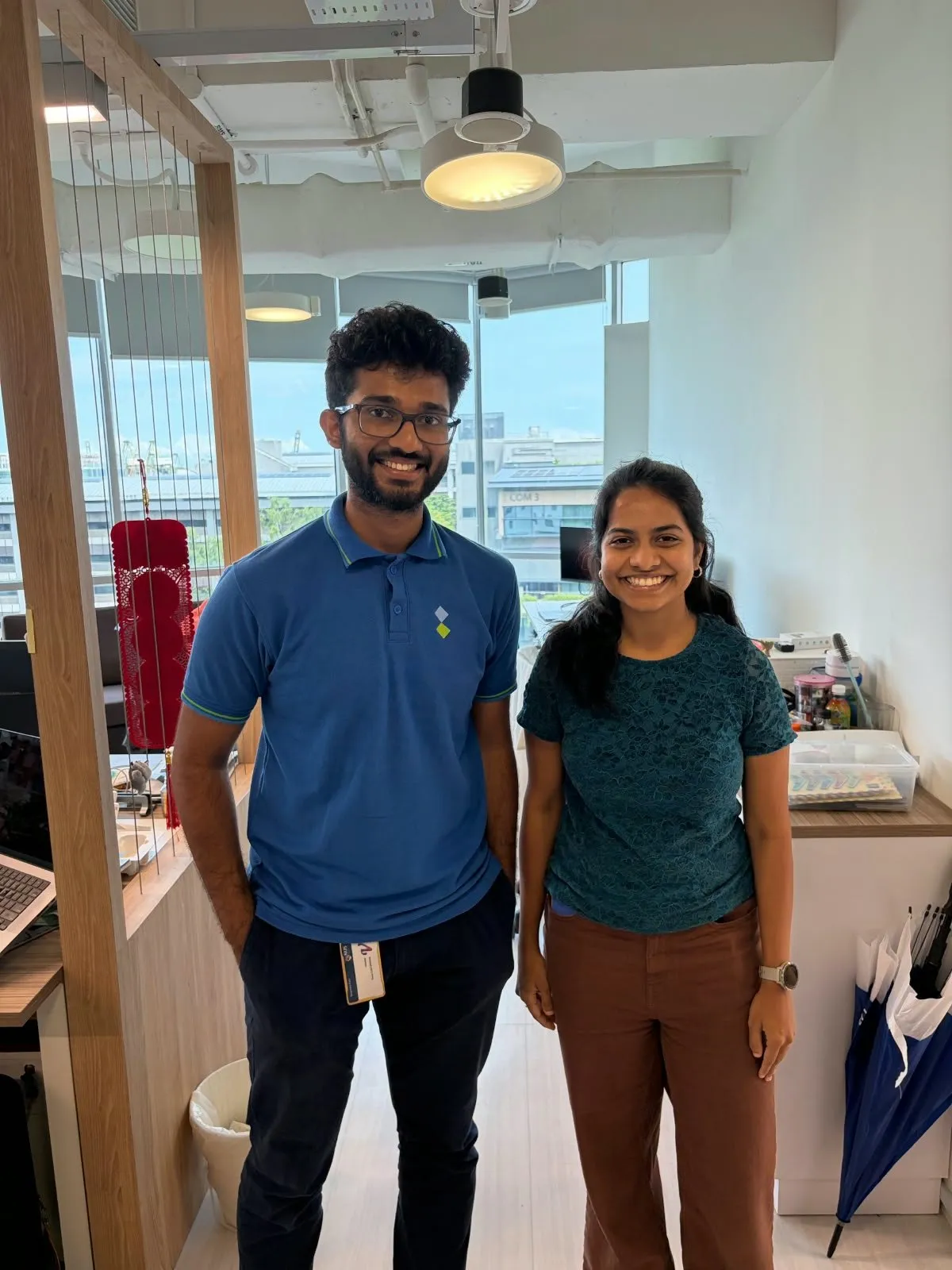
With co-author Soundarya Ramesh
Publications
- C1
OpenGut: An Open-Source Platform for Gut-Computer Interaction Research
Proceedings of the 39th Annual ACM Symposium on User Interface Software and Technology (UIST '26), Detroit, MI, USA, 2026. Full paper and demo. To appear.
- P1
Interrupting Autopilot: Evaluating Sensory Interventions for Momentary Self-Regulation
Extended Abstracts of the CHI Conference on Human Factors in Computing Systems (CHI EA '26), Barcelona, Spain, 2026. Poster.
* Equal contribution